One Magnet, Two Rulebooks: China's Trace-Content Export Licences and the Pentagon's 2027 Chinese-Content Ban Close In on the Western Rare Earth Buildout
By 1 January 2027 two export-control regimes point at the same neodymium magnet from opposite directions. Since 1 December 2025, under Ministry of Commerce Announcement No. 61, China requires a Chinese licence to export any magnet built with 0.1 percent or more Chinese-origin heavy rare earths, or made using Chinese separation technology, and it largely denies licences to buyers tied to foreign militaries. From 1 January 2027, under 10 U.S.C. 4872, the US Defense Department bars that same class of magnet from covered contracts if any stage of its production, from mining to melting, touched China, Russia, Iran or North Korea. In between sit MP Materials, now roughly 15 percent owned by the Pentagon, and USA Rare Earth, closing a $2.8bn purchase of Brazil's Serra Verde, both racing to build a mine-to-magnet chain with no Chinese content in it while China restricts the inputs and know-how that chain still needs.
Watch · The story in brief
China's 0.1 percent trace-content export licence and the Pentagon's 2027 ban on any Chinese-touched magnet converge on the same neodymium magnet, while MP Materials and USA Rare Earth's $2.8bn Serra Verde deal race to build a China-free mine-to-magnet chain. With the semiconductor Foreign Direct Product Rule as the mirror-image precedent.
What happened
Two governments spent the past year turning rare earth magnets into an instrument of control, and their rules are now set to collide on the same date. On the Chinese side, an April 2025 measure put seven rare earth elements, including dysprosium, terbium and samarium, under export licensing. On 9 October 2025, Ministry of Commerce Announcement No. 61 went much further. From 1 December 2025 a Chinese licence is required to export any magnet produced with 0.1 percent or more Chinese-origin heavy rare earths, or made using Chinese separation technology, wherever in the world that magnet is manufactured. Buyers affiliated with foreign militaries, including those of the United States, are largely to be denied.
On the American side, a sourcing rule written into the FY2023 and FY2024 defence authorizations and codified at 10 U.S.C. 4872 takes effect on 1 January 2027. From that date, covered defence contracts may not use samarium-cobalt or neodymium-iron-boron magnets, or tantalum and tungsten, if any stage of production, mining, refining, separation, melting or fabrication, occurred in China, Russia, Iran or North Korea. The rule closes the long-used workaround of melting Chinese oxide in a third country and calling the result non-Chinese.
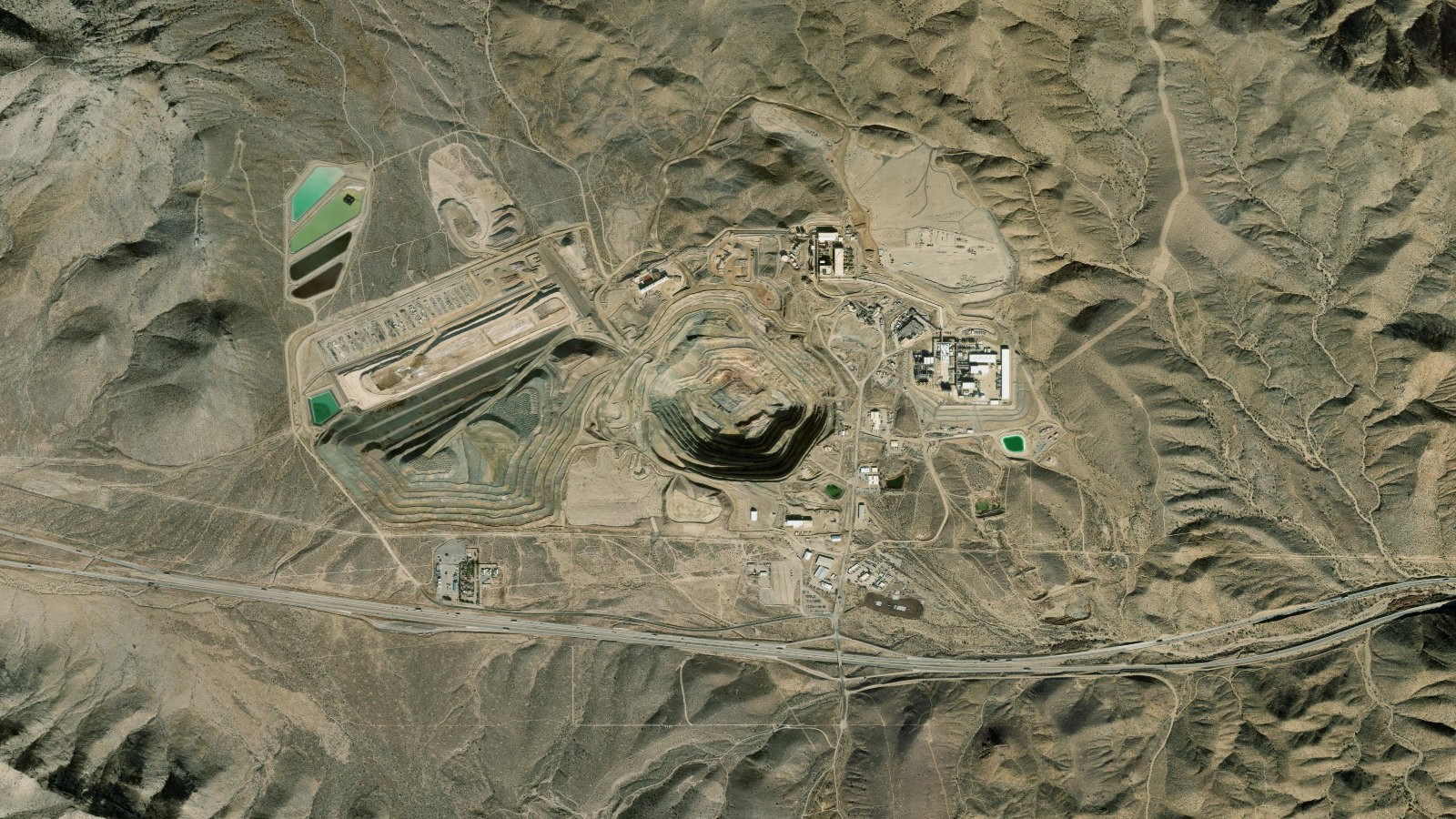
Between the two regimes, Washington is financing a domestic replacement. In July 2025 the Defense Department took roughly a 15 percent stake in MP Materials, set a $110/kg floor under its NdPr oxide and agreed to buy a decade of output from a planned magnet plant. In 2026 USA Rare Earth moved to buy Brazil's Serra Verde for about $2.8bn, adding the only non-Asian mine that yields all four magnetic rare earths, on top of a DFC loan, a DOE separations award and proposed Commerce funding.
The two rulebooks meet in the same magnet
The friction is not a tariff, it is jurisdiction over a finished good. China's rule reaches any magnet that carries a trace of Chinese material or a Chinese process step. The Pentagon's rule rejects any magnet that a Chinese step ever touched. A neodymium magnet built today from Chinese-separated oxide sits inside both: it needs a Chinese export licence to move, and it is barred from the US defence market it might move toward. Compliance with one regime does not cure exposure to the other, because each is triggered by the same fact, the Chinese content, read to opposite effect.
That leaves one narrow exit, a magnet with no Chinese atoms and no Chinese processing anywhere in its history. Building that chain is exactly what the MP and Serra Verde deals are for. It is also what China's controls are calibrated to slow, by restricting the heavy rare earth separation and the separation technology that a clean Western chain still has to source or reinvent. The deadline that makes the Pentagon rule bite, 1 January 2027, is the same horizon against which the Western capacity is being built, and the two are not guaranteed to arrive together.
Why it matters for dispute formation
The disputes form in three places. The first is the certificate. As 2027 approaches, every covered contract turns on a sourcing attestation that a Chinese stage never touched the magnet, a claim that is hard to prove down a multi-country supply chain and carries False Claims Act consequences if it is wrong. Expect challenges to certifications, terminations, and fights over what counts as a production stage.
The second is the subsidy question. A government that is at once the largest shareholder, the price-floor guarantor and the guaranteed buyer of a strategic commodity is a target for trade complaint. The price floor and offtake that de-risk MP also describe, in WTO terms, the kind of support other producers and states may contest. The third is the counterparty and control layer: a $2.8bn cross-border acquisition already under review by Brazil's CADE, a Chinese licensing regime that can deny specific buyers, and OEMs caught having to route the same part through two incompatible rulebooks.
Who's exposed
Exposed as the centre of the US buildout: under the 10 July 2025 partnership the Department of Defense holds about 15 percent on an as-converted basis and is the largest shareholder, backs a $110/kg price floor on NdPr oxide for ten years, and has committed to buy the output of a new '10X' magnet plant in Texas for a decade. That government stack secures revenue but ties MP to a sourcing standard, zero Chinese content across mining, separation and magnet-making, that China's controls are designed to make harder to reach.
Exposed as the cross-border half of the same bet. USA Rare Earth is closing a roughly $2.8bn acquisition of Brazil's Serra Verde, owner of the Pela Ema mine in Goias and the only producer outside Asia able to supply all four magnetic rare earths at scale, with a 15-year US offtake and government backing including a $565m DFC loan and a $19.3m DOE separations award. Brazil's competition regulator, CADE, has opened a review of the deal, and the leadership is turning over ahead of a Q3 2026 close.
Exposed as the buyers who must certify compliance. From 1 January 2027, DFARS 252.225-7052 makes a covered contract's samarium-cobalt and neodymium-iron-boron magnets ineligible if any production stage occurred in China, closing the melt-and-pour third-country workaround. A false or unsupported certification risks contract termination and False Claims Act liability, moving the risk from procurement into litigation.
Exposed as the licensor. Beijing controls most heavy rare earth separation and the technology to do it, and its trace-content rule asserts authority over any magnet abroad that carries a fraction of Chinese material or a Chinese process step. The leverage is real, but each denied licence gives Western buyers one more reason to design China out of the chain entirely.
Exposed to dual compliance. A single NdFeB magnet can require a Chinese export licence because it carries 0.1 percent Chinese heavy rare earths, and be barred from US defence work because a Chinese stage touched it. Firms selling into both markets must satisfy two regimes that a compliant product cannot satisfy at once, and price and route material around the gap.
The historical parallel · The US semiconductor Foreign Direct Product Rule (2020 Huawei, 2022 China controls)
Washington spent five years extending its export jurisdiction into other countries' factories through the Foreign Direct Product Rule, blocking foreign-made chips built with any US software or tooling from reaching Huawei in 2020 and much of China's advanced-chip sector in 2022. China's rare earth trace-content licence is the same instrument pointed the other way, a claim that any magnet carrying a fraction of Chinese material or a Chinese process step falls under Beijing's permission. When two powers each assert that a trace of their input governs a finished good, a single product can owe compliance to both and satisfy neither, and the contest moves from the tariff schedule into the sourcing certificate.
What to watch
- How MOFCOM administers the 0.1 percent trace-content rule in practice, and how broadly it reads 'foreign military' end use when it grants or denies licences.
- DoD and DFARS implementation guidance clarifying the 10 U.S.C. 4872 certification and the commercial-off-the-shelf carve-out before 1 January 2027.
- CADE's review of the USA Rare Earth acquisition of Serra Verde and any remedies attached to a Q3 2026 close.
- Whether the MP price-floor, equity and offtake stack draws a formal WTO subsidy challenge or countervailing action abroad.
- The first sourcing-certification disputes or False Claims Act actions as defence buyers race to certify a China-free magnet supply.
Sources
- MP Materials — DoD public-private partnership (company release)
- MINING.COM — MP Materials lands multi-billion Pentagon deal
- CSIS — China's new rare earth and magnet restrictions threaten US defense supply chains
- CSIS — Rare earth export restrictions one year later
- Rare Earth Exchanges — the Pentagon's 2027 ban on Chinese materials
- FAS — Unpacking the DoD and MP Materials partnership
- MINING.COM — USA Rare Earth wins up to $19.3M in DOE backing (Serra Verde, CADE review)
- The Diplomat — Will the US Serra Verde acquisition help break China's rare earth monopoly?
- Carbon Credits — USA Rare Earth's $2.8B Serra Verde acquisition
See the disputes forming before the market does.
Signal Watch tracks the developments. The monthly Intelligence Brief synthesizes all four signals into the disputes most likely to crystallize next — free.
Get the Intelligence BriefFor general information only; not legal advice, and no attorney–client relationship is formed through this article. Company names appear because the operators are exposed to a public development — not as a statement of wrongdoing or a predicted outcome. Figures are as reported by the linked sources.