Mexico Cancelled Nine Lithium Concessions Once. It Is Now Defending Them in Front of Two Tribunals, Largely Under the Same Treaty
Cadence Minerals announced on 29 July 2026 that its claim against Mexico over the Sonora Lithium Project had been formally registered at ICSID as ARB/26/36, brought under the United Kingdom-Mexico bilateral investment treaty of 2006. It is the second ICSID case over the same cancellation. Bacanora Lithium, Sonora Lithium and Ganfeng International Trading (Shanghai) have been running ARB/24/21 since June 2024, and that case invokes the China-Mexico treaty and the same UK-Mexico treaty together. Mexico cancelled all nine Sonora concessions in August 2023, sixteen months after a mining law amendment reserved lithium to the state. Cadence and REM Mexico hold 30 percent of the two joint-venture companies that held seven of the nine. The claim is funded by Litigation Capital Management on a non-recourse basis.
Watch · The story in brief
How one cancellation in August 2023 became two ICSID claims running at the same time, why the United Kingdom treaty is doing the work in both of them, and what a consolidation tribunal is doing in a regime that has no general power to consolidate. With the Czech Republic's two tribunals as the warning.
What happened
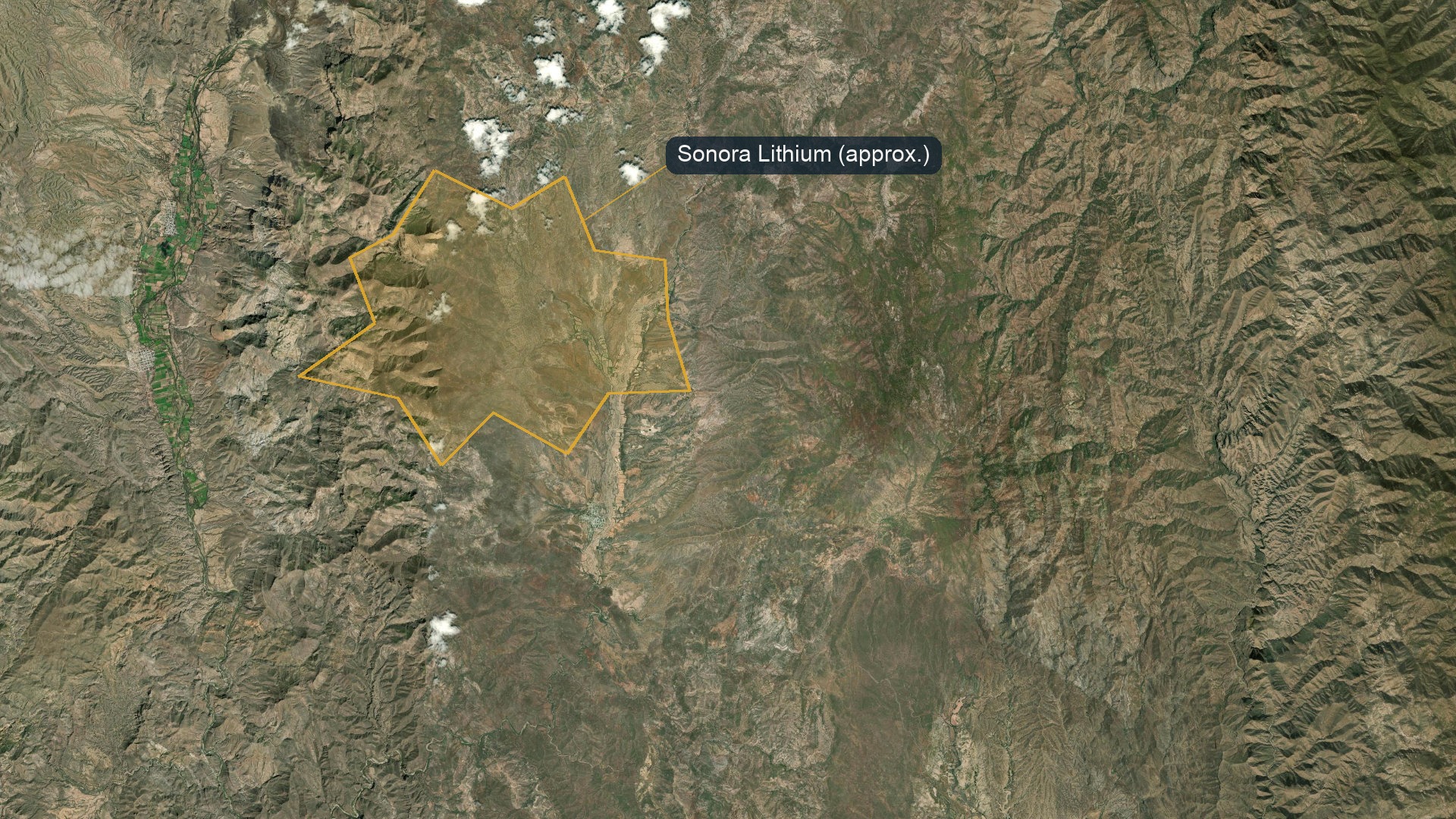
On 29 July 2026 Cadence Minerals told the market that its arbitration against Mexico had been formally registered at ICSID as case ARB/26/36. The claim runs under the agreement between the United Kingdom and Mexico on the promotion and reciprocal protection of investments, signed on 12 May 2006 and in force since 25 July 2007. Cadence and its subsidiary REM Mexico Limited hold a 30 percent interest in Mexilit S.A. de C.V. and Minera Megalit S.A. de C.V., the joint-venture companies that held seven of the Sonora Lithium Project's nine concessions. The pleaded breaches are unlawful nationalisation or expropriation, failure to accord fair and equitable treatment and full protection and security, and breach of national treatment and most-favoured-nation treatment.
The measure behind it is older. In April 2022 Mexico amended its Mining Law to declare lithium a strategic mineral and reserve its exploration and exploitation to the state. In August 2023 all nine Sonora concessions were cancelled, on the stated ground that the holders had not met required investment thresholds. Cadence had been building its position in the project since 2013.
That cancellation was already before a tribunal. Bacanora Lithium Limited, Sonora Lithium Ltd and Ganfeng International Trading (Shanghai) Co. Ltd registered ICSID case ARB/24/21 on 21 June 2024. The tribunal was constituted on 13 January 2025: Eduardo Zuleta Jaramillo presiding, with Pierre Mayer and Donald Francis Donovan. Procedural Order No. 1 of 28 March 2025 put the case under the 2022 ICSID Arbitration Rules with Washington as the seat, running in English and Spanish. Mexico asked for the case to be split and the tribunal refused on 25 August 2025.
One cancellation, two tribunals, and mostly one treaty
The detail that matters is which instruments are in play. The Cadence claim is brought under the UK-Mexico treaty. The Bacanora claim invokes the China-Mexico treaty of 2008 and the UK-Mexico treaty of 2006 together, because the claimant group spans a Shanghai trading company and two British holding entities. So the same treaty, on the same measure, on the same nine concessions, is being interpreted by two different tribunals at once.
This is not a drafting accident. It is what happens when a project is held through a chain and the chain has investors of different nationalities at different levels. Investment treaty tribunals have generally allowed a shareholder to claim for the fall in value of its shareholding, even though the loss is felt first by the company. Domestic company law usually refuses that claim and tells the shareholder the company must sue. Treaty practice took the other route, and the consequence is visible here: the operating side sues, and a 30 percent indirect holder sues as well, and both are complaining about the same act by the same state.
The obvious risk is that Mexico pays twice for one cancellation. The less obvious one is that it is told two different things. Two tribunals reading one treaty against one set of facts can reach different answers on whether reserving a mineral to the state is a regulatory choice or an expropriation, and there is no appellate body to reconcile them.
The consolidation machinery is already moving
The Bacanora file shows the system reacting. Procedural Order No. 4 of 27 October 2025 decided a request to suspend the arbitration. Procedural Order No. 5, on 11 December 2025, then addressed suspension again on the ground of changed circumstances, and the change it turned on was the constitution of a Consolidation Tribunal. The tribunal held that changed circumstances as a basis for revisiting its earlier suspension decision applied to that arbitration alone and not to the consolidation proceeding.
Read that slowly, because it is unusual. The ICSID Convention contains no general power to consolidate separate arbitrations. Treaty regimes that wanted one wrote it in, as NAFTA did at Article 1126 and as its successor did after it, and where no such provision exists consolidation depends on the parties agreeing to it. So the existence of a Consolidation Tribunal in this dispute is the first thing a practitioner should go and read, because its basis determines how much it can actually do.
For the Cadence claim the timing is awkward in a useful way. It was registered after those orders, which means the consolidation question was live before the second claimant arrived rather than being provoked by it. Whether the new case is drawn into the same machinery, and on what authority, is the procedural question that will shape the next year of this dispute.
A funded claimant is a different opponent
Cadence is a small company running a claim against a state, and it can do that because Litigation Capital Management is paying on a non-recourse basis. If the claim fails and nothing is recovered, Cadence and REM Mexico owe nothing. That is a rational way for a junior to convert a dead asset into a contingent one, and it changes what the other side does.
Under the 2022 ICSID Arbitration Rules a party must disclose the name of any third party funding the proceeding, and the tribunal may go further and order production of the funding agreement itself. Funding is no longer a private commercial matter that stays out of the record. It is also the usual predicate for an application for security for costs, on the argument that a claimant whose downside has been insured away has no incentive to be selective and no assets to meet an adverse costs order.
None of that goes to the merits. It goes to how expensive and how slow the case becomes, which for a company in Cadence's position is much the same thing as the merits.
Why it matters for dispute formation
The substantive question is the one every resource-nationalist measure eventually reaches. A state may decide that a mineral is strategic and that only the state will exploit it. What it may not obviously do is make that decision and then cancel titles already granted, on grounds that arrive after the policy. Mexico's stated reason for the August 2023 cancellations was a failure to meet investment commitments, which is a concession-compliance argument rather than a nationalisation. Whether that reason stands up is the fight, and it is the same fight in both cases.
For anyone holding Mexican ground the practical lesson is about structure rather than argument. Cadence can plead in its own name because it sits in a chain with a British parent and a treaty behind it. A 30 percent stake held through a plain Mexican company with no protected owner above it would have had no claim at all. Ownership chains built for tax reasons and ownership chains built for treaty coverage are not the same shape, and the difference only becomes visible on the day the concession is cancelled.
The wider signal is about the shape of the docket. Reserving a commodity to the state is now a normal policy instrument, and it is producing claims in sequence rather than in isolation. What is being tested in Sonora is not only whether Mexico pays, but whether the system can handle several claimants arriving at different times over one act, in a regime that never built a proper way to join them together.
Who's exposed
Exposed to two tribunals over one measure. The April 2022 amendment to the Mining Law made lithium a strategic mineral reserved to the state, and the concessions followed in August 2023. Mexico now answers a claim from the operating side of the structure and a second from a minority holder further up it, with the UK treaty in play in both. It already tried to narrow the first case and failed: the tribunal in ARB/24/21 rejected bifurcation on 25 August 2025.
Exposed as a 30 percent holder pleading in its own name. Cadence built its position from 2013 and holds its interest through Mexilit and Minera Megalit rather than in the concessions themselves. Investment treaty tribunals have generally let shareholders recover for loss reflected in the value of their holding, which is what makes this claim possible at all, and also what puts it on a collision course with the claim already running.
Exposed as the first movers, now sharing the field. Their case was registered on 21 June 2024 and the tribunal was constituted on 13 January 2025, sitting under the 2022 ICSID Arbitration Rules with Washington as the seat. Anything the Cadence tribunal decides about the same concessions lands next to their own record, and any damages award has to be reconciled with theirs.
Exposed as the named funder. The finance is non-recourse, so Cadence and REM Mexico owe nothing if the claim fails. Under the 2022 ICSID Arbitration Rules the existence and identity of a funder is a disclosure obligation rather than a private arrangement, and a funded claimant with limited assets is the standard trigger for a security-for-costs application.
Exposed to the precedent rather than the facts. Mexico has a growing docket of extractive-sector claims, and the Sonora cases will produce the first substantial reasoning on whether reserving a mineral to the state and then cancelling existing titles is regulation or expropriation. Anyone holding a Mexican title in a commodity the state might reclassify has an interest in how that is answered.
The historical parallel · CME v Czech Republic and Lauder v Czech Republic: one measure, two tribunals, opposite answers
The Czech Republic faced two arbitrations over the same interference with the same television broadcaster, brought by the same ultimate owner through different vehicles under different treaties. Ronald Lauder claimed under the United States treaty and CME claimed under the Netherlands treaty. The tribunals sat separately, heard substantially the same facts, and reached opposite conclusions within ten days of each other in September 2001: the London tribunal found no liability, and the Stockholm tribunal found the state liable and went on to award damages in the hundreds of millions. There was no mechanism to join the cases and no appellate body to reconcile the results. That episode is the standing argument for consolidation provisions, and it is the reason the Consolidation Tribunal in the Sonora dispute is worth more attention than a procedural order usually gets.
What to watch
- The basis on which the Consolidation Tribunal was constituted, since the ICSID Convention contains no general power to consolidate and any such power has to come from somewhere.
- Whether ARB/26/36 is drawn into the consolidation proceeding, and whether Mexico asks for that or resists it.
- The composition of the Cadence tribunal, and whether either side appoints anyone already sitting in the Bacanora case.
- Any application by Mexico for security for costs against Cadence, and whether the funding agreement itself is ordered into the record.
- Whether the two claims are pleaded on overlapping valuation dates and overlapping percentages of the same asset, which is where any double-recovery problem becomes concrete.
- Why a decision of the Court of King's Bench of Alberta from October 2025 sits in the file of an ICSID case about Mexican lithium.
Sources
- Cadence Minerals RNS - Sonora Lithium Project, ICSID arbitration formally registered (29 July 2026)
- Mexico Business News - Cadence Minerals formalizes ICSID claim against Mexico
- italaw - Bacanora Lithium, Sonora Lithium and Ganfeng v. Mexico, ICSID Case No. ARB/24/21
- Mexico Business News - Ganfeng Lithium initiates arbitration against Mexico
- BNamericas - Ganfeng launches arbitration against Mexico over Sonora lithium concessions
- Jus Mundi - Procedural Order No. 5, decision on suspension due to changed circumstances (11 December 2025)
- Jus Mundi - Procedural Order No. 4, decision on the suspension of the arbitration (27 October 2025)
- Jus Mundi - Revised Procedural Order No. 3, revised decision on bifurcation (25 August 2025)
- ICSID - Bacanora and others v. Mexico, case documents
- Gibson Dunn - Resource nationalism's new frontier: lithium, rare earths, and the legal map ahead
See the disputes forming before the market does.
Signal Watch tracks the developments. The monthly Intelligence Brief synthesizes all four signals into the disputes most likely to crystallize next — free.
Get the Intelligence BriefFor general information only; not legal advice, and no attorney–client relationship is formed through this article. Company names appear because the operators are exposed to a public development — not as a statement of wrongdoing or a predicted outcome. Figures are as reported by the linked sources.