Peru Pays the First $49.4m of the Lupaka Award, and the Case That Made a Community Blockade the State's Problem Moves From Doctrine to Cash
An ICSID tribunal in Lupaka Gold Corp v Republic of Peru, ARB/20/46, held on 30 June 2025 that Peru breached full protection and security and fair and equitable treatment, and unlawfully expropriated, when it failed to act against the invasion and blockade of the Invicta gold project by the Rural Community of Parán from September 2018. Damages of about $40m rose past $68m with interest and costs. Lupaka filed to enforce in the US District Court for the District of Columbia on 27 January 2026, and Peru then agreed a two-tranche settlement split between ministries: about $49.4m from the Ministry of Energy and Mines by 31 July 2026, confirmed received, and about $21.2m from the Ministry of the Interior by 31 December 2026.
Watch · The story in brief
How a community blockade at Invicta in September 2018 became an ICSID finding that Peru breached full protection and security, why the tribunal attributed the community's conduct to the state, and how an enforcement filing in Washington turned a $68m award into a two-ministry payment schedule. With Bear Creek v. Peru as the counterweight.
What happened
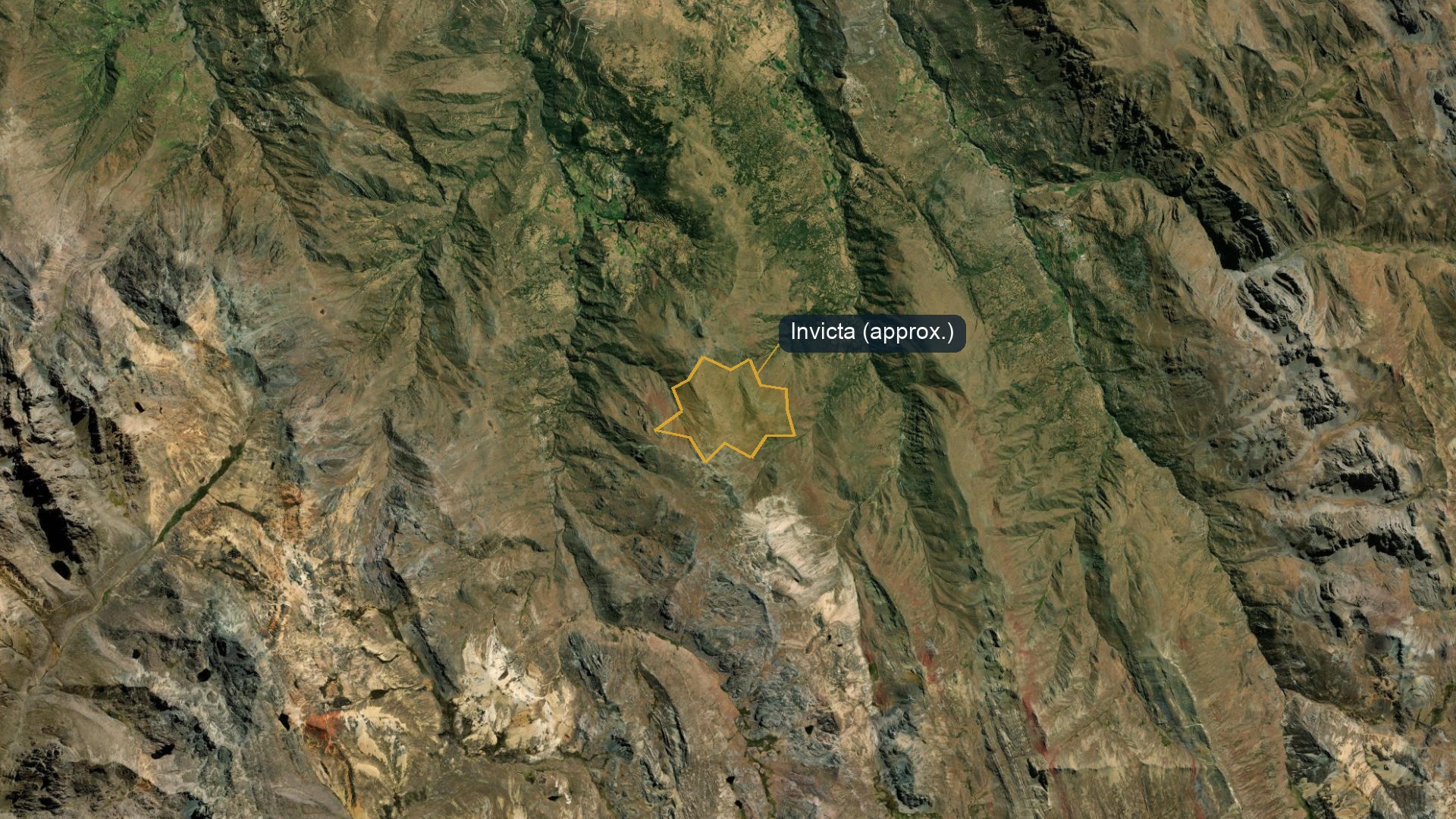
Invicta is a gold project in Huaura province, roughly 120 kilometres north of Lima. By 2018 Lupaka's subsidiary Invicta Mining had driven 3,000 metres of underground workings, built a 29-kilometre access road, completed metallurgical testing and signed agreements with local communities. In September 2018 members of the Rural Community of Parán invaded and blockaded the site. The blockade held, the project was paralysed through 2019, and the mine was ultimately taken.
The tribunal in ICSID Case No. ARB/20/46, chaired by Professor John R. Crook with Oscar M. Garibaldi and Dr Gavan Griffith KC, issued its award on 30 June 2025. It found unanimously that Peru had breached the full protection and security and fair and equitable treatment standards of the Canada-Peru free trade agreement and had unlawfully expropriated the investment, holding that the community's blockade, occupation and seizure were attributable to the state. Damages were about $40m, and with interest, costs and expenses the total ran past $60m, reaching roughly $68.2m by the end of January 2026.
Peru did not pay on the award alone. Lupaka filed an enforcement action in the United States District Court for the District of Columbia on 27 January 2026. A payment schedule followed, splitting the liability between two ministries: about 70 percent, some $49.4m, from the Ministry of Energy and Mines by 31 July 2026, and about 30 percent, some $21.2m, from the Ministry of the Interior by 31 December 2026. The company confirmed in early August that the first tranche had arrived.
The attribution question underneath the money
Full protection and security has usually been argued as a duty of vigilance. A state is not an insurer against private violence, but it must exercise due diligence to protect an investment, and it answers for its own inaction. Lupaka pushes further, into treating the acts of a rural community as conduct for which the state is responsible, and that is why the case has drawn commentary well beyond the parties. The award turns a failure to police into an expropriation.
The doctrinal discomfort is real and it runs in both directions. If community action is attributable to the state, a government facing a blockade is exposed to treaty damages whether it moves in or holds back, which pushes it toward force in precisely the situations where consultation obligations under ILO Convention 169 counsel patience. Peru's own choice to split the bill between the mining ministry and the interior ministry is a quiet acknowledgement of that bind: one department granted the right, another was supposed to make it usable.
Why it matters for dispute formation
The enforcement sequence is the practical lesson. An ICSID award is not self-executing against a state that would rather wait, and what changed here was a filing in Washington under the regime that lets a US court enter judgment on an ICSID award. Six months separated that filing from a signed payment schedule. For a claimant, that is the shape of the leverage; for a state with US-facing assets and market access to protect, it is the shape of the risk.
The unpaid tranche is where the next dispute would form. About $21.2m sits with the Ministry of the Interior on a 31 December 2026 deadline, and an instalment plan across two budgets in a state with Peru's recent political turnover is an assumption, not a certainty. The DC action is the obvious lever if the second payment slips, and the reason to watch it is that the pattern, an award, an enforcement filing, then a negotiated schedule, is now the working template for recovering against a state that has decided the reputational cost of non-payment exceeds the cash.
Who's exposed
Exposed as the paying respondent, and exposed twice over in how it chose to pay. Splitting the award between the Ministry of Energy and Mines and the Ministry of the Interior maps the liability onto the two failures the tribunal identified, permitting a project and then not policing access to it. The first tranche of about $49.4m was due 31 July 2026 and has been received; about $21.2m from the Interior Ministry remains outstanding until 31 December.
Exposed as a claimant whose asset became a judgment. Before the September 2018 blockade Invicta had 3,000 metres of underground development, a 29-kilometre access road, community agreements and completed metallurgical testing. The company recovered on the state's conduct rather than on the mine, and the enforcement action it filed in Washington on 27 January 2026 is what preceded the payment schedule.
Exposed to the reasoning rather than the outcome. The tribunal treated the conduct of a rural community as attributable to the state and read full protection and security as a duty that required Peru to act. That gives an investor facing a blockade a route to the state's balance sheet, and it gives the state a strong incentive to intervene earlier and harder in exactly the confrontations where restraint is usually the safer policy.
Exposed as the subject of an attribution finding they were not party to. Commentary in EJIL: Talk! and on the Kluwer Arbitration Blog has pressed the point that treating community action as state conduct sits awkwardly with Indigenous self-determination and with the consultation obligations states owe under ILO Convention 169. The award resolves the investor's loss without resolving that tension.
The historical parallel · Bear Creek Mining Corporation v. Republic of Peru (ICSID Case No. ARB/14/21)
Peru has been on both sides of this argument. In Bear Creek, decided in November 2017, the state revoked the decree underpinning the Santa Ana silver project after protests in Puno, and the tribunal found an unlawful expropriation but awarded only sunk costs of about $18m rather than the discounted cash flow the claimant sought. In a separate opinion Professor Philippe Sands went further, reasoning that the investor's own handling of community relations and consultation contributed to the collapse. Lupaka runs the other way on near-identical raw material: the same state, the same pattern of local opposition halting a permitted project, and a tribunal that put the failure on the government rather than on the company. The two awards together mark out the field, with the investor's conduct toward communities on one side and the state's duty to protect on the other, and the boundary between them is where the next case will be argued.
What to watch
- Whether the Ministry of the Interior pays the remaining $21.2m by 31 December 2026, and what happens to the DC enforcement action if it does not.
- How other tribunals treat the Lupaka attribution reasoning, particularly in cases where community blockades stopped a permitted project.
- Peru's policing posture at other contested sites, given that inaction has now carried a nine-figure consequence once.
- Any legislative or ministerial response in Lima allocating responsibility for site security at mining projects between MINEM and the Interior Ministry.
- Whether claimants facing state delay follow the sequence Lupaka used, filing in Washington first and negotiating a schedule second.
Sources
- Lupaka Gold — arbitration award status and payment updates
- Mining Weekly — Lupaka wins ICSID dispute against Peru over gold project
- Mining Technology — Lupaka Gold wins final arbitration award over Invicta
- BNamericas — Lupaka sues Peru in the US to enforce the ICSID award
- EJIL: Talk! — Indigenous self-determination and state responsibility in Lupaka v Peru
- Kluwer Arbitration Blog — Lupaka v Peru, rethinking the boundaries of attribution
- Investing News Network — arbitration award update, August 2026
See the disputes forming before the market does.
Signal Watch tracks the developments. The monthly Intelligence Brief synthesizes all four signals into the disputes most likely to crystallize next — free.
Get the Intelligence BriefFor general information only; not legal advice, and no attorney–client relationship is formed through this article. Company names appear because the operators are exposed to a public development — not as a statement of wrongdoing or a predicted outcome. Figures are as reported by the linked sources.