Indonesia's Nickel-Quota Whiplash — When Permission-to-Produce Becomes an Annual Question
Indonesia — roughly 60% of the world's mined nickel — spent mid-2026 whipsawing its own market: reports of a jump in the 2026 ore quota to ~360 million tonnes, then a flat ministry denial days later. Behind the noise is a structural shift — the return to annual, discretionary RKAB approvals, which turns permission-to-produce into a lever the state resets every year.
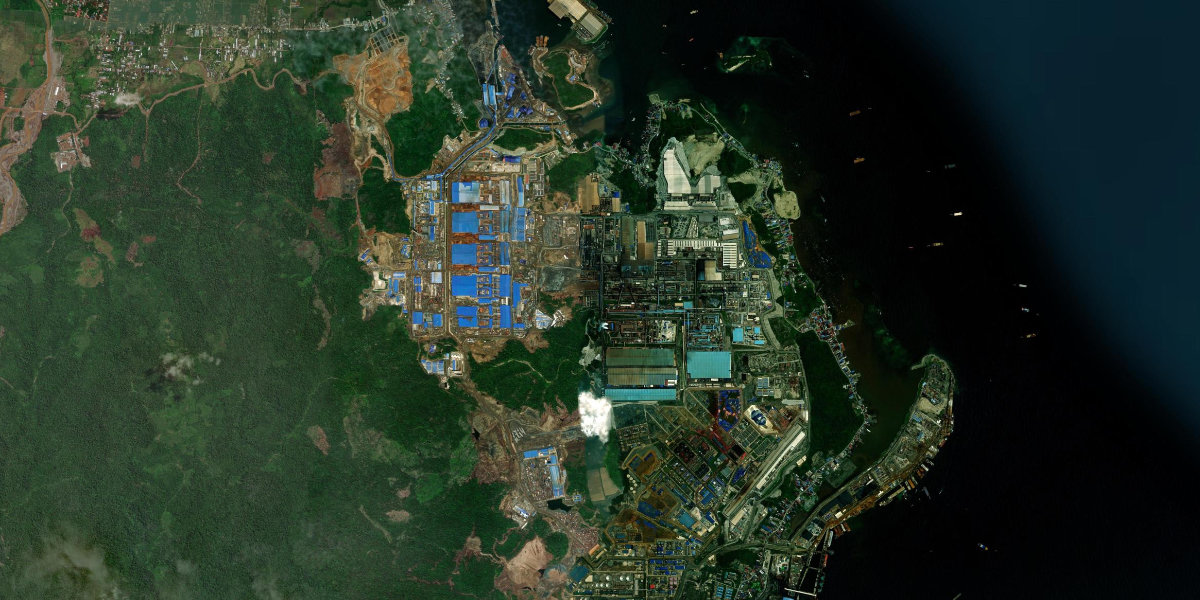
What happened
Indonesia produces roughly 60% of the world's mined nickel, so its permitting choices set the global price. For 2026 the government reverted from multi-year (three-year) RKAB approvals — the Rencana Kerja dan Anggaran Biaya work-plan-and-budget that authorises how much a miner may produce — back to annual approvals. As of early April 2026 the approved 2026 nickel-ore quota stood at roughly 190–200 million tonnes, with full-year output projected around 260–270 million tonnes, well below the ~379 million tonnes approved for 2025.
Then the whipsaw: in late June, reports said the energy ministry would lift the 2026 quota to about 360 million tonnes through a mid-year RKAB revision — easing a squeeze the same policy had created. Within days the Ministry of Energy and Mineral Resources denied it, its Director-General of Mineral and Coal telling Bloomberg the ministry had 'never made such a statement.' No formal mechanism for a mid-year revision has been finalised. Nickel rallied on the shortage story, then gave much of it back on the denial — moved less by supply than by the ambiguity of the rule.
Why it matters for dispute formation
The signal is not the tonnage — it is the mechanism. When national output runs on annually-approved, discretionary work plans, permission-to-produce becomes a recurring lever the state can tighten, loosen, or leave deliberately ambiguous. Shortening RKAB validity from three years to one multiplies the decision points at which a producer's volume — and therefore its offtake commitments, its financing covenants, and its price exposure — can be reset. Eramet's Weda Bay suspension shows the lever is live.
For counsel, the exposure is contractual before it is anything else. Offtake and supply agreements priced against a stable-output assumption inherit the quota's discretion; force-majeure, change-of-law and volume-flexibility clauses are tested when the approval moves. And the ambiguity itself — a reported easing, then a denial, with no published revision mechanism — is a governance risk that ratings, lenders and counterparties price. The chokepoint is policy; the disputes it seeds are commercial, and they form quietly, in the gap between what was approved and what was assumed.
Who's exposed
One of Indonesia's largest nickel producers, with output gated by the annual RKAB work-plan approval. Its exposure is not title but throughput — how much it may mine and process each year now turns on a discretionary quota that can be tightened, and whose mid-year revision mechanism the government has not yet finalised.
ASX-listed and Indonesia-focused, operating inside the IMIP/IWIP industrial parks. Its planning horizon shortened with the reversion from multi-year to single-year RKAB validity — the visibility that underpins offtake and financing now resets annually against a moving quota.
Suspended production at its Weda Bay operation in Indonesia in 2026 as quota constraints bit — the clearest illustration that a discretionary approval is an operational and contractual event, not a paperwork formality.
The historical parallel · Indonesia — Measures Relating to Raw Materials (WTO DS592, EU v. Indonesia)
Indonesia's nickel policy already produced a landmark trade dispute. In November 2022 a WTO panel found Indonesia's 2020 nickel-ore export ban and domestic-processing requirement breached GATT Article XI:1 and were not saved by the critical-shortage or compliance exceptions; Indonesia appealed into the defunct Appellate Body, leaving the ruling unenforced. The through-line: the export ban built the domestic smelting boom that the annual quota now throttles — the same discretionary hand, one turn later. When a state wields production and export rules as industrial policy, the exposure is not a single measure but a standing willingness to reset the rules — litigated at the WTO by states, and downstream in commercial and treaty fora by the companies caught in the reset.
What to watch
- Whether a formal mid-year RKAB revision mechanism is published, and at what tonnage it lands.
- Eramet's Weda Bay restart, and any force-majeure or volume disputes flowing from quota-driven suspensions.
- The nickel price path as the quota signal moves — and how offtake counterparties respond to output uncertainty.
- Whether the single-year, discretionary approval model spreads to coal and other minerals, or hardens into a standing tool.
Sources
See the disputes forming before the market does.
Signal Watch tracks the developments. The monthly Intelligence Brief synthesizes all four signals into the disputes most likely to crystallize next — free.
Get the Intelligence BriefFor general information only; not legal advice, and no attorney–client relationship is formed through this article. Company names appear because the operators are exposed to a public development — not as a statement of wrongdoing or a predicted outcome. Figures are as reported by the linked sources.