Ghana Abolishes Its Mining Stability Pacts — and Puts Seven Months on the Clock for Tarkwa
Accra's new 5–12% sliding-scale gold royalty took effect on 10 March 2026 over coordinated diplomatic protests. Gold Fields' Tarkwa Development Agreement — the last major contractual shield still standing — expires April 2027, opening a dispute-formation window that is now measurably short.
What happened
On 15 January 2026, Ghana's Minerals Commission announced that the country would scrap long-term mining investment stability agreements and replace the existing 3–5% flat royalty with a sliding scale ranging from 5% to 12%, automatically triggered by the prevailing gold price. The top band activates when gold exceeds $4,500 per ounce — a threshold already breached when the new Legislative Instrument was approved by Parliament and took effect on 10 March 2026, with gold trading above $5,000.
The policy dismantles two decades of bespoke fiscal incentives. Newmont's Ahafo Development Agreement, which had capped the royalty at 3–5% and locked in a 32.5% corporate tax rate with duty and VAT relief on qualifying inputs, expired in December 2025 and was explicitly refused renewal. Gold Fields retains temporary protection for Tarkwa under a 2016 Development Agreement valid until 17 April 2027; Damang was already transferred to government ownership when its lease expired in April 2026. AngloGold Ashanti's arrangement runs on a parallel track toward a 2027 lapse.
The reaction was unusually coordinated. Six governments — including the United States, China, the United Kingdom, Canada, and Australia — formally protested the policy, pushing for the 12% ceiling to apply only above $5,000 per ounce rather than $4,500. Ghana rejected that modification. Chinese-owned operators including Zijin Mining, Chifeng Jilong Gold Mining, and Shandong Gold filed formal protests through the Association of China–Ghana Mining, warning the rates could threaten the viability of the Akyem, Wassa, and Cardinal mines respectively. The CEOs of Newmont, Gold Fields, AngloGold Ashanti, and Perseus separately delivered written concerns to Ghana's lands minister — a level of collective industry mobilisation described by one industry source as unlike anything in recent years.
Ghana's justification is grounded in commodity-cycle arithmetic. Africa's largest gold producer recorded output of six million ounces in 2025, a record, while its largest operators posted their strongest earnings in years. The Minerals Commission has publicly framed the reform as a windfall-sharing mechanism that tracks market reality rather than pure resource nationalism, and reduced the Growth and Sustainability Levy from 3% to 1% as a partial offset. Whether that offset is regarded as adequate by operators whose contractual expectations of stability have been frustrated is a separate, and legally material, question.
Why it matters for dispute formation
The abolition of Development Agreements is not merely a tariff change — it is the termination of a class of individually negotiated, parliament-ratified instruments that operators used as the contractual backbone for project finance, equity returns modelling, and capital allocation decisions. Where those agreements contain their own dispute-resolution clauses or cross-reference bilateral investment treaties, their non-renewal or unilateral supersession by a legislative instrument of general application raises a legitimate-expectations argument that is well-trodden in investor-state arbitration. The question is not whether Ghana can legislate — it plainly can — but whether operators who made capital commitments (in Newmont's case, a minimum $300 million investment tied to the 2015 renewal) in reliance on agreed fiscal terms are entitled to compensation for the abrupt change in those terms.
Ghana resigned from most of its bilateral investment treaties and currently provides foreign investors a more limited treaty protection landscape than many peer jurisdictions. The primary contractual route to international arbitration for operators in the production phase runs through the exploitation contract itself or through a separate investment protection agreement with the Ministry of Production. This means the dispute-formation pathway is contract-law-driven rather than treaty-driven — a structural difference that affects both the choice of forum and the applicable standard of review. Operators without explicit arbitration clauses in their Development Agreements, or whose agreements have now lapsed, may be confined to Ghanaian domestic courts unless an exploitation contract clause or a separately negotiated investment protection agreement preserves an international arbitral remedy.
The seven-month window before Gold Fields' Tarkwa Development Agreement expires is the most immediate pressure point. Any renegotiation that Gold Fields pursues in this period will set the market signal for what terms are achievable, and any failure to reach agreement before April 2027 will test whether the DA's stabilisation provisions survive expiry or whether the company simply defaults to the new Legislative Instrument. The GoldBod pre-emption mechanism and mandatory domestic sales provisions — separate from the royalty — add foreign-exchange, pricing, and payment-timing risks that are not captured in the headline rate discussion but that compound the overall fiscal exposure materially.
For operators without stability cover, the dispute calculus is already live. Newmont is in its first full quarter under the new regime. At gold prices above $5,000, the effective royalty burden at Ahafo has more than doubled relative to the expired pact. The scale of that cash-flow shift is large enough to affect project economics on Ahafo North, which only commenced commercial production in late 2025 and was underwritten on assumptions tied to the previous fiscal environment. If operators move toward treaty or contract claims, the timing and quantum of capital commitments made in reliance on now-lapsed agreements will be central to any damages theory.
Who's exposed
Newmont's Ahafo Development Agreement expired at end-2025 and was not renewed; the company is already operating under the new 12% sliding-scale royalty regime at current gold prices, a step-change that analysts estimate strips hundreds of millions of dollars from annual cash flow relative to the former 3–5% pact.
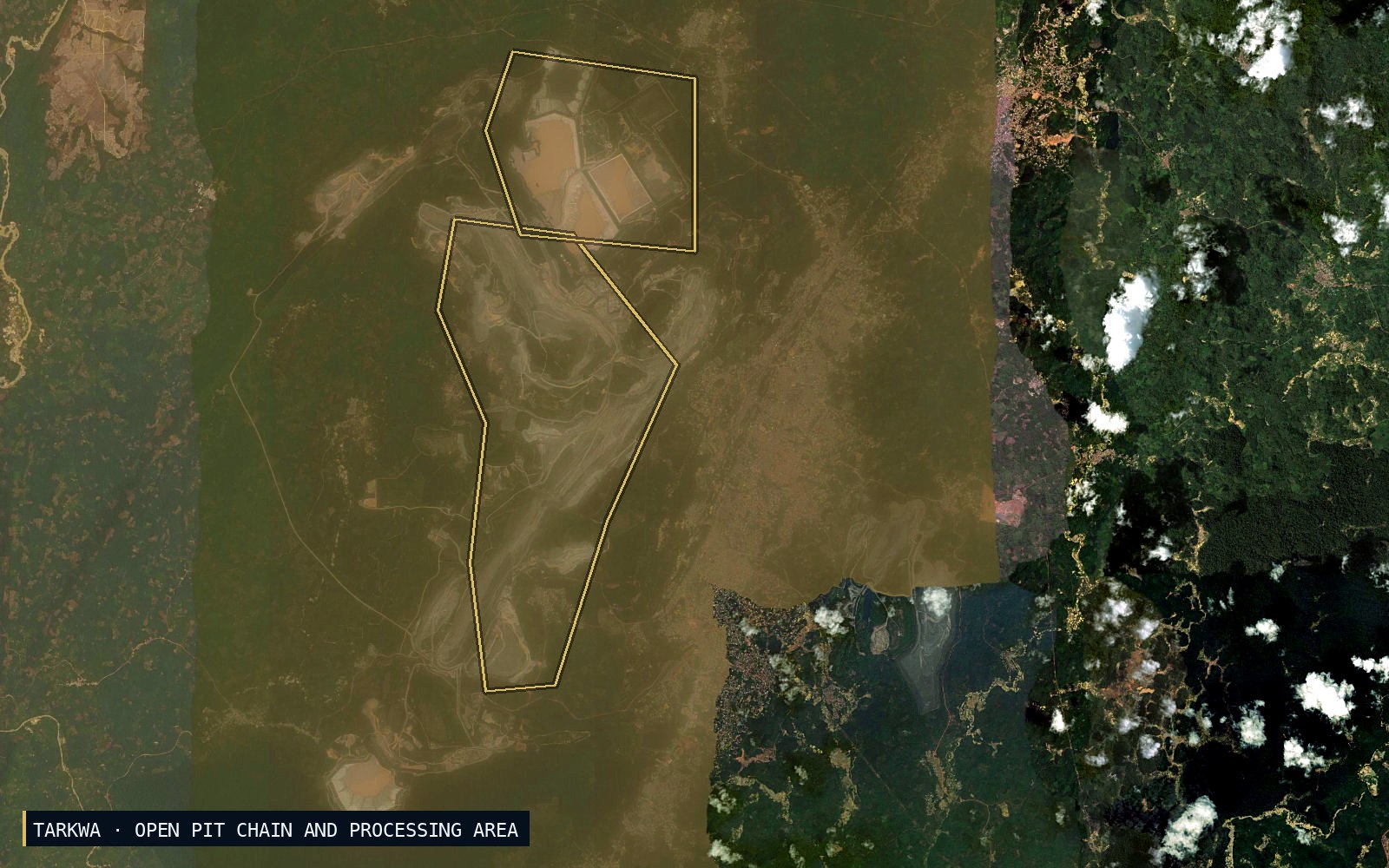
Gold Fields' Development Agreement covering Tarkwa provides contractual protection from the new royalty until 17 April 2027; H1 2026 SEC filings confirm the company is tracking that expiry closely, after which its fiscal terms will be governed entirely by the new legislative instrument.
AngloGold Ashanti's stability arrangement is similarly due to lapse in 2027; Ghana's Minerals Commission has stated that no renewals will be granted, exposing the company to the same sliding-scale regime on the same timeline as Gold Fields.
The historical parallel · Windstream Energy v. Canada (NAFTA/UNCITRAL, Award 2016)
Although a renewables case rather than a mining one, Windstream is the canonical illustration of how a host state's unilateral legislative reversal of specifically negotiated project terms can found a legitimate-expectations claim even where the state retains broad regulatory discretion. Ghana's position — that Development Agreements were always subject to sovereign legislative override and that no renewal was ever guaranteed — mirrors the argument Canada made and lost in Windstream. The critical variable in Ghana's case is the more limited treaty architecture available to investors, which may push claimants toward contract-based arbitration (under the exploitation contract or investment protection agreement) rather than BIT claims, potentially narrowing the standard of review and the scope of available remedies compared with a full treaty claim.
What to watch
- Gold Fields' Development Agreement for Tarkwa expires 17 April 2027: watch for renegotiation talks, a Minerals Commission extension offer, or a formal notice of dispute in Q4 2026 and Q1 2027.
- Newmont's disclosure of incremental royalty costs in its Q3 2026 earnings (expected October 2026) will quantify the real cash-flow impact and may presage public commentary on fiscal terms — the threshold signal for escalation.
- AngloGold Ashanti's parallel DA lapse on the same 2027 timeline: if Gold Fields sets a precedent in renegotiation (or dispute), AngloGold's options will be shaped by that outcome.
- Ghana's new Minerals and Mining (Amendment) Bill and any further legislative instruments covering the GoldBod pre-emption mechanism and mandatory domestic sales: each additional layer of state intervention broadens the potential claim surface for affected operators.
Sources
- CNBC Africa — Ghana to scrap mining stability pacts, double royalties
- Gold Fields Ltd — Form 6-K H1 2026 (SEC EDGAR)
- Global Finance Magazine — Ghana Gambles on Gold Royalties
- Serrari Group — Ghana Defies Global Pressure to Launch Sliding-Scale Gold Royalty
- Serrari Group — Ghana Ends Mining Stability Agreements Era
- Ecofin Agency — Ghana's Gold Reset: Royalties Up, Stability Pacts Out
- Energy Capital Power — Ghana's Gold Tax Gamble
See the disputes forming before the market does.
Signal Watch tracks the developments. The monthly Intelligence Brief synthesizes all four signals into the disputes most likely to crystallize next — free.
Get the Intelligence BriefFor general information only; not legal advice, and no attorney–client relationship is formed through this article. Company names appear because the operators are exposed to a public development — not as a statement of wrongdoing or a predicted outcome. Figures are as reported by the linked sources.