Thousands of Tonnes of Uranium Left the Congo Inside Cobalt, and Less Than a Tenth of It Was Declared
A study published in Nature Communications on 30 July 2026 by researchers at the University of Wisconsin-Madison and Princeton estimates that between 2,000 and 5,000 tonnes of natural uranium left the Democratic Republic of the Congo between 2000 and 2024, carried inside cobalt-hydroxide shipments, across a period in which the country reported no uranium production at all. The researchers put the share publicly declared to the International Atomic Energy Agency at under 10 percent. Around 95 percent of Congolese cobalt goes to China. Kinshasa has said it will test cobalt hydroxide exports, convene a working group, ask the IAEA about a technical support mission, and report on health and environmental risk within 60 days.
Watch · The story in brief
How researchers came to estimate that 2,000 to 5,000 tonnes of natural uranium left the Congo inside cobalt-hydroxide shipments between 2000 and 2024, with under a tenth declared to the IAEA, and why the gap between what moved and what was declared cuts three ways at once. With Shinkolobwe as the eighty-year-old precedent.
What happened
On 30 July 2026 Nature Communications published work by researchers at the University of Wisconsin-Madison and Princeton estimating that cobalt-hydroxide shipments out of the Democratic Republic of the Congo carried between 2,000 and 5,000 tonnes of natural uranium between 2000 and 2024. Across those years the country declared no uranium production. The researchers put the publicly declared share of the material at under 10 percent. At the lower end of the range, that quantity would fuel a gigawatt reactor for more than a decade.
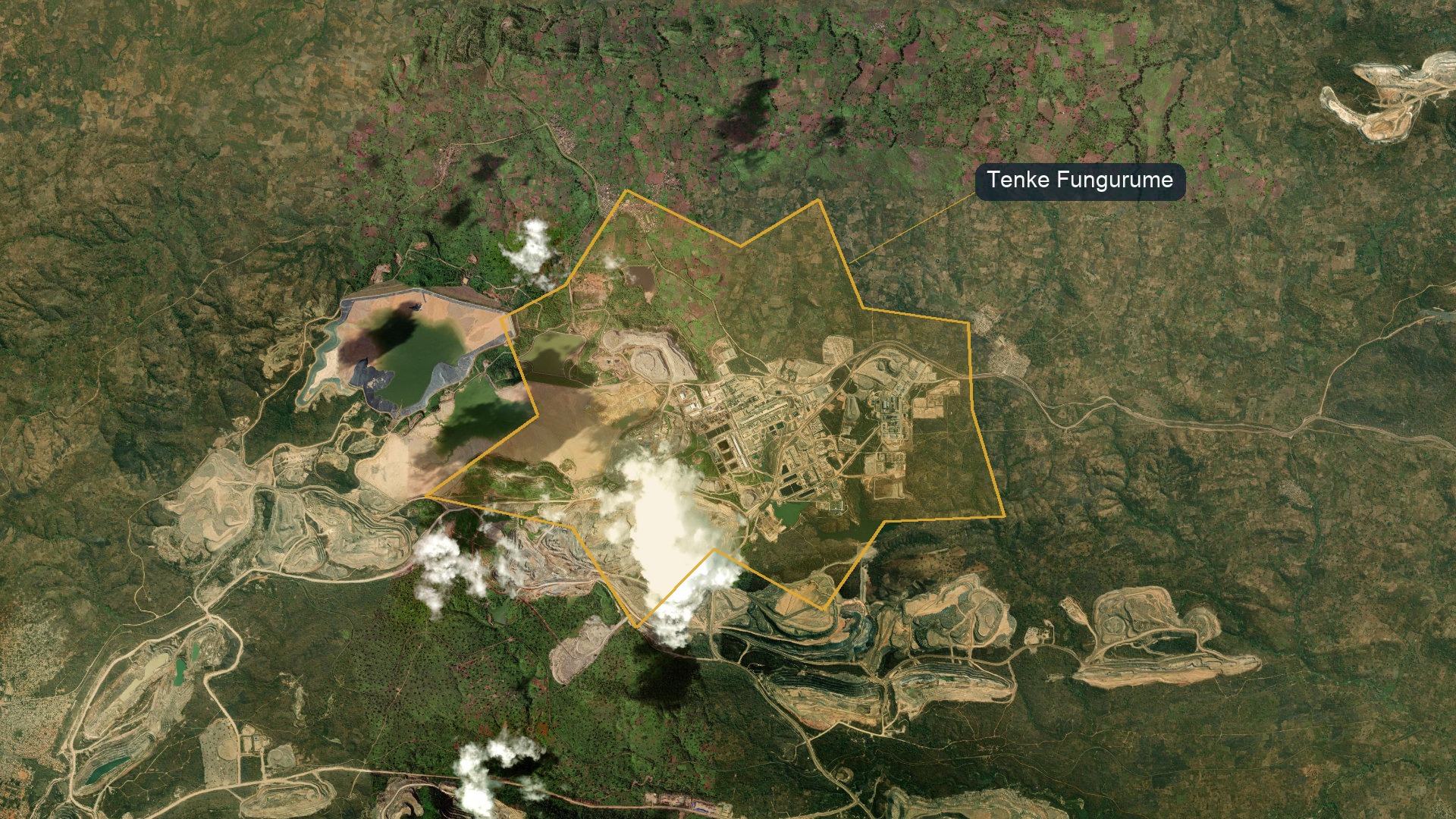
An accompanying investigation by Lighthouse Reports set out what sat behind the estimate: leaked internal memoranda and spreadsheets from Tenke Fungurume, a 2009 IAEA memorandum recording uranium in significant quantities in Katanga cobalt ore, a 2014 Finnish permit allowing the Kokkola refinery to produce or hold up to 10,000 kilogrammes of uranium annually, trade data on phosphoric acid, and hyperspectral satellite imagery. The internal samples cited from Tenke Fungurume reach 1,100 parts per million, described in the reporting as fifteen times the permitted export level. CMOC denies the claims.
Kinshasa responded within days. The government said it would test cobalt hydroxide exports, the great majority of which go to China, and convene a working group on the findings. It also said it would consult the IAEA about a technical support mission, and that domestic authorities would assess health and environmental risk over 60 days and publish what they find.
The number that matters is the tenth
Uranium sitting alongside copper and cobalt in the Katanga sediments is geology, not wrongdoing. Naturally occurring radioactive material travels with a great many mineral concentrates, and the industry has long had rules for measuring it, labelling it and capping how much may leave in a shipment. What turns this from a technical matter into a legal one is the gap between what moved and what was declared.
That gap does work in several directions at once. Against an export limit it is a compliance question, because a consignment over the threshold should not have shipped. Against a safeguards obligation it is a reporting question, because a state party accounts for source material entering and leaving its territory. Against a buyer it is a description question, because material sold as cobalt hydroxide carried something else. None of those turn on proving that anyone intended it.
Why it matters for dispute formation
The immediate risk to operators is retrospective. A testing regime introduced now produces measurements now, and a regulator holding a current number will be tempted to reason backwards across a shipment history. Royalties, export duties and penalties are assessed on what was declared, so a finding that the declaration was wrong reopens closed years. Producers will answer that the state wrote the rules, licensed the exports and cleared the customs documents throughout. That is a real answer, and it is also the shape of an investment-treaty argument.
The second front is contractual, and it runs down the chain rather than up. Offtake agreements carry specifications and warranties. Carriers and insurers price a cargo on its declared classification, and radioactive material is not classified the way a base-metal intermediate is. If historic cargoes are shown to have exceeded a radiological limit, the questions become who warranted what, whether the buyer knew, and whether a refiner recovering uranium downstream was taking an undisclosed benefit or carrying an undisclosed liability.
The third is the one to watch, because it moves fastest. Testing takes time, and a state that has just promised to test has an obvious reason to hold cargoes while it does. Cobalt prices have already risen sharply on Congolese export restrictions. An interruption justified on radiological grounds would reach offtake contracts as a force-majeure question and the market as another supply shock, well before any of the slower arguments about liability are resolved.
Who's exposed
Exposed as the state that reported no uranium production across the period in question while, on the study's estimate, thousands of tonnes left inside another commodity's shipments. Kinshasa has moved quickly, promising export testing, a working group, an approach to the IAEA and a 60-day public assessment of health and environmental risk. Everything it finds becomes a record others can use, against its own agencies and against the operators.
Exposed as the operator most specifically named. Reporting on leaked internal documents describes cobalt samples at the site reaching 1,100 parts per million of uranium in December 2016, put at fifteen times the permitted export level, shortly after CMOC acquired the asset from Freeport-McMoRan. CMOC has denied the contamination claims. The exposure is the paper trail rather than the ore: an internal measurement is the sort of thing a regulator, a buyer or a tribunal reads closely.
Exposed as the parties who shipped, carried, insured and processed material that may not have matched its documents. Eurasian Resources Group operates Metalkol. Glencore and Orano declined to comment to the reporters. The Kokkola refinery in Finland, once run by Freeport-McMoRan and now by Umicore, held a 2014 Finnish radiation-authority permit to produce or hold up to 10,000 kilogrammes of uranium a year. Specification warranties, radiological limits and transport classification all rest on the declaration being right.
Exposed as the endpoint of roughly 95 percent of Congolese cobalt, in a country refining about 80 percent of global supply. The head of the DRC's nuclear energy agency, Steve Muanza, has said it is technically possible and likely that Chinese companies extract uranium from the exported ore. If that is right, the material stops being a contaminant and becomes an unreported transfer of source material.
Exposed as the system meant to see this. The IAEA has said the DRC meets its safeguards obligations, on the reasoning that the uranium ends up in tailings. A 2009 agency memorandum, since leaked, recorded uranium in significant quantities in Katanga cobalt ore. If the material is being recovered downstream rather than discarded, the premise holding the current position together no longer works.
The historical parallel · Shinkolobwe, Katanga: uranium leaving the Congo off the books since the 1940s
The pattern is older than the cobalt trade. Shinkolobwe in Katanga supplied the ore behind roughly two thirds of the fissile material in the Manhattan Project, with about 30,000 tonnes sold to the US Army between 1942 and 1944. The mine was officially closed and its entrances sealed with cement after a collapse in July 2004 killed eight people, and a United Nations assessment found a high risk of further collapse and of chronic exposure to ionising radiation, concluding it had to stay shut. Artisanal mining continued anyway. The through-line is not that Congolese uranium is a secret. It is that the formal record of what leaves the country has never matched what actually leaves it, and the gap between the two is where the legal exposure has always collected.
What to watch
- What the 60-day health and environmental assessment concludes, and whether Kinshasa publishes the underlying measurements or only the findings.
- Whether the IAEA accepts a technical support mission, and whether its position that the uranium ends up in tailings survives contact with the data.
- Any export testing protocol, the radiological threshold it sets, and whether cargoes are held while testing is stood up.
- Whether the DRC pursues retrospective royalties, duties or penalties on past shipments, and how operators respond.
- Movement in cobalt hydroxide pricing and offtake terms as buyers reprice the risk of radiological non-conformity.
Sources
- Nature Communications — uranium in cobalt-hydroxide exports from the DRC
- University of Wisconsin-Madison — study reveals undeclared uranium exported from the DRC
- Lighthouse Reports — Congo's Hidden Uranium Exports
- MINING.COM — DRC probes how 5,000 tonnes of uranium leaked into cobalt exports
- The Northern Miner — DRC probes how uranium leaked into cobalt exports
- ANS Nuclear Newswire — undeclared uranium hitches a ride on cobalt exports from Congo
- Investing News Network — report unveils undeclared uranium in DRC cobalt exports
- James Martin Center for Nonproliferation Studies — uranium security in the DRC
- Shinkolobwe — mine history, the 2004 closure and the UN assessment
See the disputes forming before the market does.
Signal Watch tracks the developments. The monthly Intelligence Brief synthesizes all four signals into the disputes most likely to crystallize next — free.
Get the Intelligence BriefFor general information only; not legal advice, and no attorney–client relationship is formed through this article. Company names appear because the operators are exposed to a public development — not as a statement of wrongdoing or a predicted outcome. Figures are as reported by the linked sources.