Congo Banned Concentrate Exports in June and the Market Found Out in August. It Reaches 2.6 Percent of the Copper, and One Operator Holds Most of That
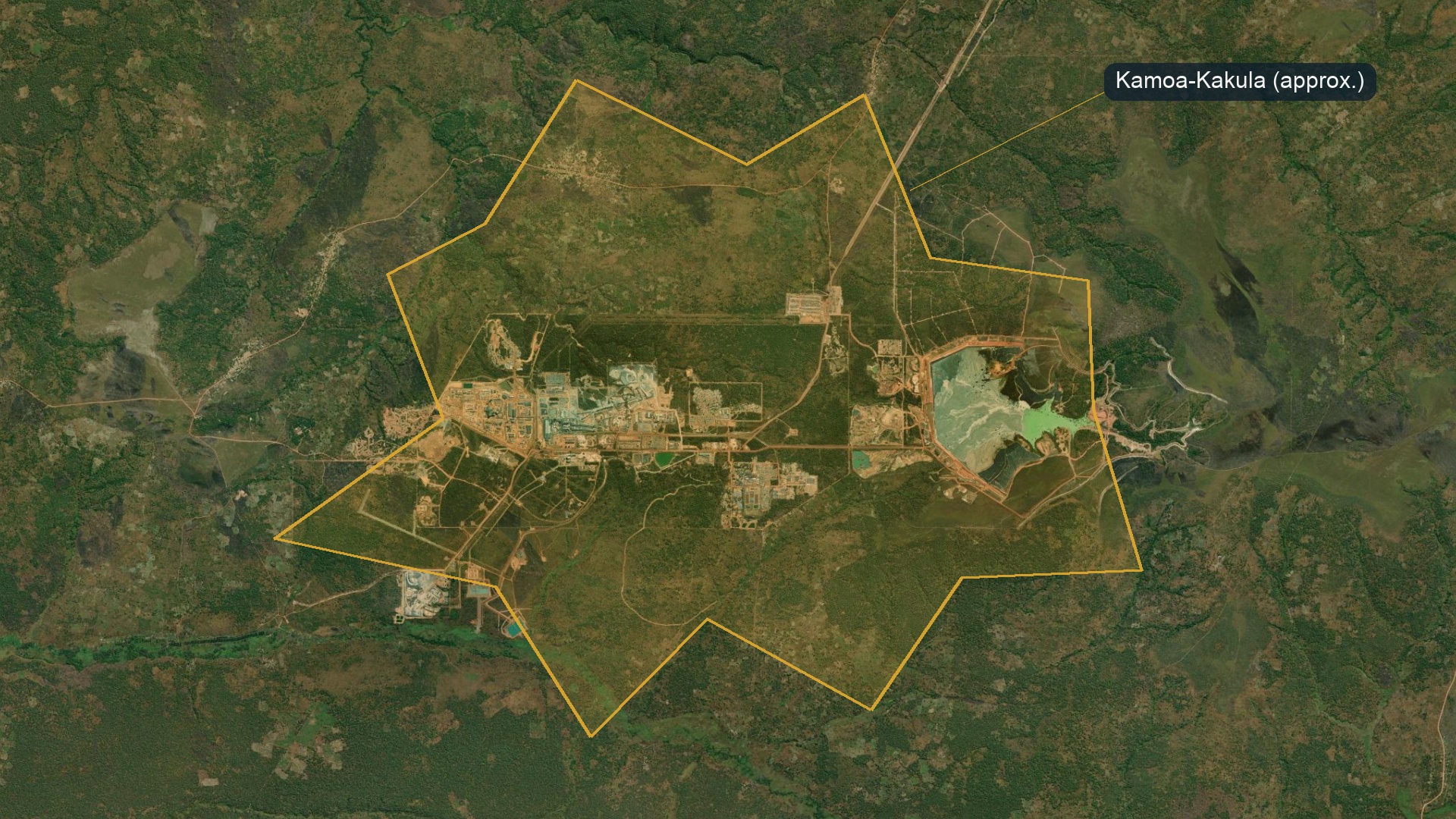
An inter-ministerial order signed on 29 June 2026 by the ministers of mines, foreign trade and national economy prohibits the export of copper and cobalt concentrates from the Democratic Republic of the Congo. Reuters obtained the text and reported it on 6 August, five weeks after signature. The order replaces the framework of 4 August 2023 together with the exemptions granted under it, and leaves relief as a one-year waiver in the discretion of the mines minister. In the first quarter of 2026 concentrate carried 18,863 tonnes of copper metal out of the country against 696,725 tonnes as cathode, so the prohibition reaches about 2.6 percent of exported copper. Most of that tonnage belongs to Kamoa-Kakula and Kipushi, both operated by Ivanhoe Mines with Zijin Mining, and both repeat holders of the exemptions now withdrawn.
Watch · The story in brief
Why a prohibition that touches a small share of Congolese copper is still the most exposed measure Kinshasa has taken this year, how thirteen years of ban-and-waiver made the waiver the real rule, and what happens when a state repeals the exemptions and keeps the discretion. With Indonesia's nickel ore ban as the decided precedent.
What happened
An inter-ministerial order signed on 29 June 2026 prohibits the export of copper and cobalt concentrates from the Democratic Republic of the Congo. It was signed by Louis Watum Kabamba as minister of mines, Julien Paluku Kahongya as minister of foreign trade, and Daniel Mukoko Samba as deputy prime minister for the national economy. The stated purpose is to encourage operators to market and export mineral products with higher added value. Reuters obtained the text and reported it on 6 August, five weeks after signature. Copper on the London Metal Exchange rose 1.8 percent to 14,369.50 dollars a tonne on the report. Ivanhoe Mines, Zijin Mining and the Congolese chamber of mines did not respond to requests for comment.
The order does more than prohibit. It replaces the framework adopted on 4 August 2023, including the exemptions issued under it, and resets the rules on how merchant mineral products are commercialised, exported and classified. It also introduces a fiscal treatment for recoverable substances found during refining, valuing them at 55 percent before the mining royalty is calculated, with a three-month transition in which operators declare those substances without paying immediately.
This is the fourth prohibition of its kind. Kinshasa banned concentrate exports in 2013, in 2019 and in 2023. Each time the prohibition ran alongside waivers granted where domestic smelting and refining capacity fell short of what the mines produced, which it always did.
The aggregate is small and the incidence is narrow
The volumes make the measure look modest. In the first quarter of 2026 the country exported 696,725 tonnes of copper as cathode and 53,926 tonnes of concentrate carrying 18,863 tonnes of copper metal. Concentrate was therefore about 2.6 percent of the copper metal that left the country. Congolese copper is overwhelmingly produced as cathode through solvent extraction and electrowinning, so a concentrate ban leaves the great majority of a roughly 3.4 million tonne annual output untouched.
The incidence is the part that matters. Reporting names Kamoa-Kakula and Kipushi as the assets that held the repeated exemptions, and the analyst Christian-Geraud Neema has said most operators face limited severe impact while Kamoa-Kakula is the most affected. A measure drafted in general terms whose burden falls almost entirely on one investor group is a shape that investment tribunals recognise.
It is worth being precise about what that shape does and does not prove. Disparate impact is not itself a breach. A state may regulate in ways that happen to hurt one company more than others, and the fact that a rule bites hardest on the largest producer of the regulated product is close to tautological. The question a tribunal asks is whether the state can explain the distinction on grounds unrelated to the identity of the party bearing it, and whether the process that produced it was one the investor could see coming and respond to.
The exemptions were the regime, and they have gone
For thirteen years the operative rule in the Congo has not been the prohibition. It has been the waiver. A ban issued in 2013, reissued in 2019 and reissued in 2023 has coexisted throughout with exemptions granted because the country could not process what it dug up. An operator reading that history would conclude, reasonably, that the prohibition was a lever for negotiating processing commitments rather than a rule that stopped shipments.
The 29 June order changes the machinery. It repeals the 2023 framework and the exemptions granted under it, then reintroduces relief as a discretionary one-year waiver from the minister of mines for cases treated as strategic. Withdrawing a permission that has been renewed for over a decade is the strongest form of the legitimate-expectations argument available in investment arbitration, and it is considerably stronger than a complaint about the underlying ban.
The argument has a known weakness. An expectation founded on a discretionary permission is harder to defend than one founded on a written commitment, because the instrument granting it always said the state could decide otherwise. What tends to move tribunals is specificity and reliance: whether the state made representations to this investor, and whether capital was committed on the strength of them. A mine financed and built to ship concentrate is reliance in a fairly concrete form.
The discretion is itself a liability. An official empowered to decide who may export is an official who may decline, delay or condition, and the state here holds equity across the sector through Gecamines and owns 20 percent of Kamoa Copper. Unbounded administrative discretion exercised by a shareholder in the market it regulates is where fair and equitable treatment claims usually begin, and the absence of published criteria for what makes a project strategic will be the first document request.
The stabilisation language is narrower than it looks
Ivanhoe's annual information form records that the DRC reaffirmed Kamoa Copper's tenements and guaranteed that Kamoa-Kakula would not be subject to any taxes or duties other than those legally required by the applicable statutory and regulatory provisions, for the life of the project. That reads as a stabilisation guarantee, and it is worth less than it sounds. The carve-out swallows the promise. An inter-ministerial order is a regulatory provision, so a lawfully made instrument that changes the royalty base is inside the exception rather than outside it. The clause protects against levies with no legal foundation. It does not freeze the law.
The general position is no more comfortable. The 2018 revision of the mining code cut the fiscal and legal stability guarantee from ten years to five, which was the change that provoked the industry's confrontation with Kinshasa at the time. Operators relying on stability under the 2002 code have had years to work out that the protection had a horizon.
The dispute clause is more interesting than the stabilisation language. Ivanhoe's disclosure records that the agreement is governed by Congolese law and that any dispute goes to binding arbitration, in French, in Paris, in full accordance with the Convention on the Settlement of Investment Disputes between States and Nationals of Other States, with the award enforceable under the New York Convention of 1958. Two parts of that do not sit together. An award under the ICSID Convention is enforced through Article 54, which obliges every contracting state to treat the pecuniary obligation as a final judgment of its own courts, and the New York Convention neither applies nor is needed. Arbitration under the Convention also has no seat in the ordinary sense, so naming Paris does very little work. The combination reads like the ICSID Additional Facility, where the New York Convention does apply and the seat matters a great deal. Kamoa Holding is incorporated in Barbados, an ICSID contracting state, so the Convention route is open on nationality, while Kamoa Copper SA is a Congolese company and would need an agreement under Article 25(2)(b) to be treated as foreign-controlled. If this clause is ever invoked, the first phase will be spent working out which regime the parties actually chose.
Why it matters for dispute formation
The claim, if one comes, will be built on the withdrawal of the waiver rather than on the prohibition. States are entitled to require domestic processing, and a tribunal will give Kinshasa considerable room on industrial policy. What states get less room on is removing a specific permission that a specific investor has relied on for years, through an instrument that reserves the power to restore it case by case and publishes no criteria for doing so.
The timing forces a decision quickly, and the decision is awkward. The prohibition takes effect at once while the by-product regime has a three-month transition, so operators have to choose whether to apply for a waiver almost immediately. Applying accepts the legitimacy of the machinery and puts the operator in a queue administered by its own shareholder. Declining to apply leaves the tonnage stranded and hands the state a mitigation argument. The safest course is usually to apply, in terms that expressly reserve rights, and to keep a clean record of every representation received in return.
The trade-law analysis is favourable and probably academic. An export prohibition of this kind is a quantitative restriction under Article XI:1 of the GATT, and in the Indonesian raw materials dispute a panel found that both an export ban on nickel ore and a domestic processing requirement fell foul of that provision, rejecting the argument that the ore was an essential product. The obstacle is standing. Only members bring WTO claims, and the member with the strongest commercial interest in Congolese concentrate is China, which has defended comparable restrictions of its own and has no reason to establish a precedent against them.
There is one more thread worth holding. The order taxes recoverable substances found during refining at a 55 percent valuation, and requires them to be declared. That lands ten days after the publication of research estimating that thousands of tonnes of natural uranium left the country inside cobalt hydroxide with under a tenth of it declared. Whether the two are connected, a rule that compels operators to identify and value what else is in the material creates exactly the record that a retrospective royalty assessment, or a safeguards inquiry, would need.
Who's exposed
Exposed as the operator that carries most of the affected tonnage. Kamoa-Kakula is the largest concentrate producer in the country, and reporting names it and Kipushi as the assets that received the repeated exemptions the order now repeals. Ivanhoe and Zijin did not respond to Reuters. The Congolese state holds 20 percent of Kamoa Copper, so the government sits on both sides of the measure. Ivanhoe's own annual information form records a life-of-project guarantee from the DRC against taxes and duties beyond those legally required, and an arbitration clause pointing at the ICSID Convention.
Exposed as the second named exemption holder. Kipushi is a zinc-led operation with a copper concentrate stream, restarted in 2024 after decades on care and maintenance, and the economics of a restart are unusually sensitive to a change in the export route. A project that was financed on the assumption that concentrate leaves the country has a sharper legitimate-expectations argument than an established producer.
Exposed as the author of the measure and a shareholder in the businesses it binds. The stated purpose is to push operators toward products with higher added value, which is a legitimate policy aim and one that WTO panels have declined to accept as a defence to an export prohibition. Kinshasa also holds equity across the sector through Gecamines, which means any waiver decision will be read against the state's own commercial interest.
Exposed as the buyers of the material that can no longer move. China refines the great majority of Congolese copper and cobalt, and a domestic processing requirement upstream reroutes feed that Chinese plants were built to take. China is also the WTO member with the clearest standing to challenge an export restriction of this kind, and the least appetite to do so, having defended comparable measures of its own.
Exposed to a classification fight rather than a prohibition. The order prohibits concentrates and, on the reporting, also redefines how merchant mineral products are classified for commercialisation and export. Cobalt hydroxide is an intermediate rather than a concentrate on most readings, and Q1 2026 hydroxide exports of 51,940 tonnes contained 17,054 tonnes of metal, well above the concentrate tonnage. Where the line falls is now worth a great deal of money.
The historical parallel · Indonesia - Measures Relating to Raw Materials (DS592): an export ban and a processing requirement, both found inconsistent with Article XI:1
Indonesia banned exports of nickel ore and imposed a domestic processing requirement, for the same stated reason Kinshasa gives now, which is to capture more value at home. The European Union brought a claim and the panel report issued in November 2022 found both measures inconsistent with Article XI:1 of the GATT. The panel held that Article XI:1 reaches measures restricting the sale for export, so the processing requirement was caught as well as the ban itself, and it found Indonesia had not shown nickel ore to be an essential product for the purposes of the Article XI:2(a) exception. Indonesia appealed into an Appellate Body that cannot hear appeals, which left the report unadopted and the ban in place. The lesson Congolese officials will have drawn is not that the measure is lawful. It is that the trade system produced a finding and no consequence, which is why the pressure on this order will come from investment arbitration rather than Geneva.
What to watch
- Whether the order is published in the Journal Officiel, under what reference, and whether the five-week gap between signature and public knowledge is repeated for the implementing texts.
- Which operators apply for one-year waivers, which are granted, and whether Kinshasa publishes any criteria for what makes a project strategic.
- Whether cobalt hydroxide is treated as caught by the prohibition, given that Q1 hydroxide exports carried more contained metal than concentrate did.
- Any notice of dispute or request for consultations from Ivanhoe, Zijin or Kipushi, and whether it is framed on the waiver withdrawal rather than the ban.
- How the 55 percent by-product coefficient is applied in practice, and whether the uranium now being tested for in cobalt hydroxide is valued under it.
- The concentrate-to-cathode spread and any build-up of unshipped concentrate at Kamoa-Kakula and Kipushi.
Sources
- Reuters - Exclusive: Congo bans exports of copper and cobalt concentrates, official order says
- CNBC Africa - Congo bans exports of copper, cobalt concentrates
- StoneX - DRC bans copper and cobalt exports, what do we need to know
- Beto.cd - l'interdiction d'exporter touche 2,6 % des ventes
- Mines.cd - le gouvernement durcit sa politique miniere
- Zoom Eco - le Gouvernement muscle le dispositif sur les concentres non transformes
- Actualite.cd - Kinshasa interdit l'exportation des concentres de cuivre et de cobalt
- Ivanhoe Mines - Annual Information Form (Kamoa arbitration and tax guarantee language)
- Kamoa Copper SA - ownership and project background
- WTO - DS592 Indonesia, Measures Relating to Raw Materials
- TRT Afrika - La RDC interdit les exportations de concentres de cuivre et de cobalt
- Norton Rose Fulbright - major changes to the mining code of the DRC (2018 stability guarantee)
See the disputes forming before the market does.
Signal Watch tracks the developments. The monthly Intelligence Brief synthesizes all four signals into the disputes most likely to crystallize next — free.
Get the Intelligence BriefFor general information only; not legal advice, and no attorney–client relationship is formed through this article. Company names appear because the operators are exposed to a public development — not as a statement of wrongdoing or a predicted outcome. Figures are as reported by the linked sources.